How to Stay Warm at Night
Gear Guides
You can do everything else right, but if you’re cold at night you’re not going to enjoy yourself. A chilly, uncomfortable night can ruin an otherwise great camping trip, and it’s something almost every beginner struggles with at first. The truth is, staying warm isn’t just about having a good sleeping bag - it’s about keeping heat in, keeping moisture out, and using a few simple tricks that make a huge difference once the temperature drops. This guide shows you exactly how to stay warm, dry, and comfortable all night long, so you wake up feeling rested instead of counting the hours until morning.
The Warmth Fundamentals
Your body is the heater
The most important thing to understand is that your sleeping bag doesn’t generate heat - you do. Your body warms the air inside the bag, and the bag’s job is simply to trap that warmth. If you go to bed already cold, tired, or damp, your sleeping bag has nothing to work with. Staying warm starts with keeping yourself warm before you climb in.
Insulation matters more than thickness
Warmth isn’t about having the biggest, puffiest sleeping bag. It’s about insulation - stopping heat from escaping. Your sleeping mat plays a huge role here because the cold ground pulls heat away faster than the air does. A good mat with decent insulation (R‑value) often makes a bigger difference than upgrading your sleeping bag.
Dry = warm
Moisture is the enemy of warmth. Damp clothes, sweat, condensation, or even a slightly wet base layer can make you feel cold no matter how good your gear is. Staying dry isn’t just about avoiding rain - it’s about managing sweat, humidity, and the moisture that naturally builds up inside a tent overnight. Dry layers trap heat; damp layers steal it.
Airflow inside your sleeping bag matters
A sleeping bag works best when it’s snug enough to trap warm air but not so tight that it compresses the insulation. If the bag is too open, warm air escapes. If it’s too tight, the insulation can’t do its job. A comfortable, slightly fitted shape is ideal - especially around the shoulders and neck.
Warmth comes from layers, not one big item
Beginners often rely on a single “big warm thing” - a thick jumper, a heavy sleeping bag, or a bulky blanket. But warmth comes from layers working together: a dry base layer, a warm mid‑layer, a good sleeping bag, and an insulated mat. Each layer traps a little heat, and together they keep you warm far more effectively.
Your tent affects warmth more than you think
A tent doesn’t heat you, but it protects you from wind, drafts, and moisture -all of which affect how warm you feel. A well‑pitched tent with a tidy flysheet and properly set guy lines reduces cold spots and keeps condensation under control. A sloppy pitch can make the inside feel noticeably colder.
Practical Ways to Stay Warm
Warm up before you get into your sleeping bag
Your sleeping bag can only trap the heat you already have. If you climb in feeling cold, it’ll take ages to warm up. Do something small to raise your body temperature first: a short walk, a few gentle movements, or even just setting up the last bits of camp. You don’t need to break a sweat — just get comfortably warm.
Change into dry clothes before bed
Even if you don’t feel wet, your daytime clothes will have picked up moisture from sweat, humidity, or light rain. That dampness will make you cold fast. Switching into a dry base layer before bed is one of the simplest and most effective ways to stay warm all night.
Use a warm, breathable base layer
A thin, moisture‑wicking base layer traps heat without making you sweaty. Cotton is a bad choice because it holds moisture; synthetic or merino works far better. You don’t need anything fancy - just something dry and comfortable.
Keep your sleeping bag loosely zipped until you’re warm
If you zip your bag up tight immediately, you trap cold air inside. Let the bag stay slightly open for a minute or two while your body warms the air, then close it up. It’s a small trick that makes the first part of the night much more comfortable.
Make sure your sleeping mat has enough insulation
Your mat is just as important as your sleeping bag. If the ground is stealing your heat, nothing else will fix it. An R‑value of 2–3 is perfect for most UK camping. If your mat is thin or uninsulated, add a folded blanket or spare clothing underneath to reduce heat loss.
Eat something warm before bed
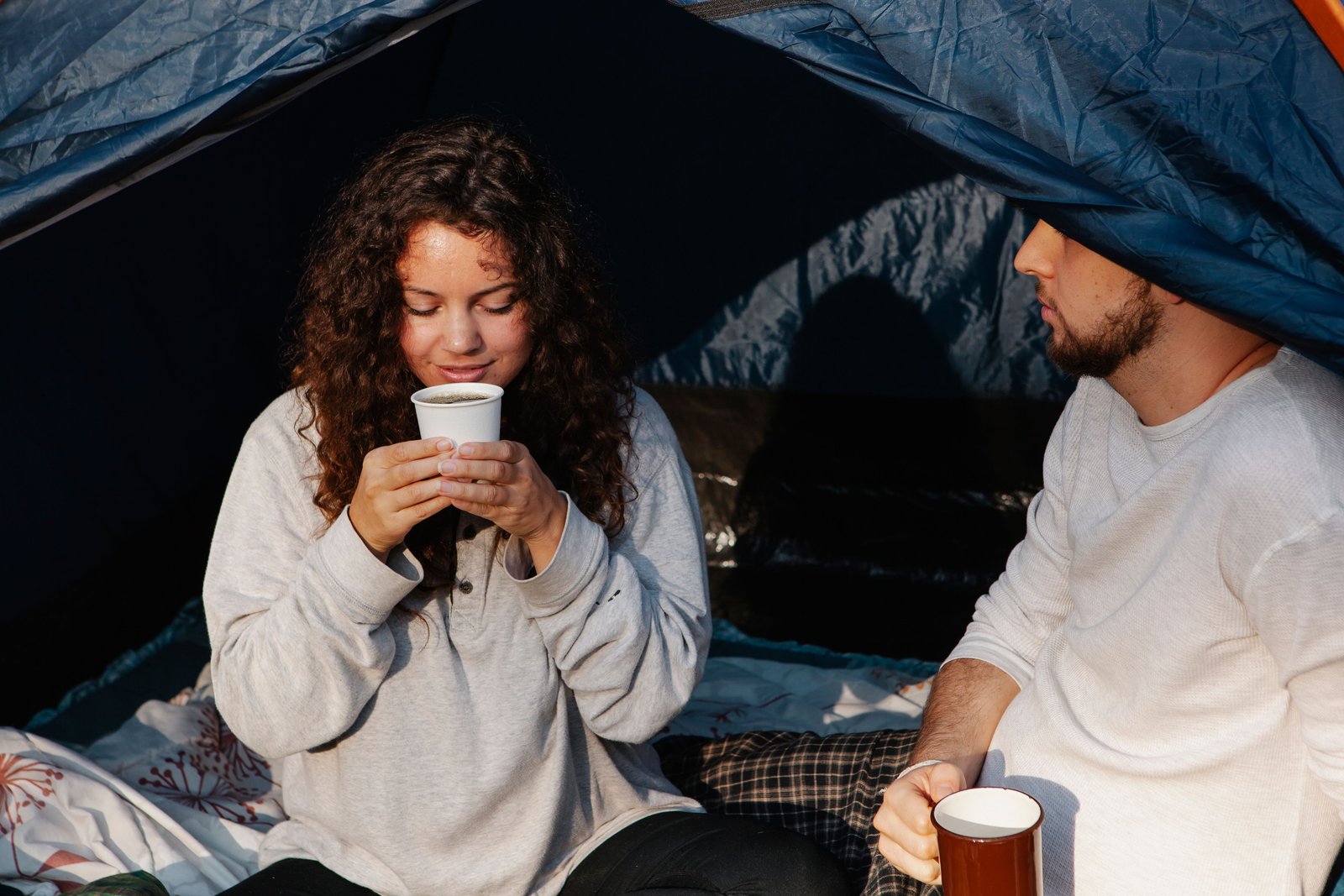
A warm drink or a small snack helps your body produce heat. You don’t need a full meal - just something comforting that gives your body a little energy boost. Avoid going to bed hungry; it makes you colder.
Vent your tent slightly to reduce condensation
It sounds counter‑intuitive, but a tiny bit of airflow keeps you warmer. When a tent is sealed completely, moisture builds up inside and makes everything damp - including your sleeping bag. Opening a vent or cracking the door mesh helps keep the air dry, which keeps you warmer.
Keep your head and neck warm
A lot of heat escapes from your head and shoulders. A thin hat or buff makes a big difference, and tightening the sleeping bag’s hood slightly helps trap warm air without feeling claustrophobic.
Use spare clothes as insulation
If you have a fleece, jumper, or jacket you’re not wearing, don’t leave it lying around. Put it inside your sleeping bag around your feet or hips, or lay it over your torso inside the bag. It adds insulation exactly where you need it.
Avoid breathing inside your sleeping bag
It’s tempting to burrow in completely when you’re cold, but breathing inside the bag fills it with moisture. That moisture makes the insulation less effective and eventually makes you colder. Keep your mouth and nose outside the bag, even if the rest of you is tucked in.
Common Mistakes
Going to bed already cold
If you climb into your sleeping bag shivering, it takes ages to warm up. Beginners often sit still for too long before bed, cool down, and then expect the sleeping bag to fix it. Your body is the heater - it needs a little warmth to start with.
Sleeping in damp clothes
Even slightly damp layers - from sweat, humidity, or light rain - will make you cold fast. Many beginners keep the same clothes on from the day, not realising how much moisture they’ve picked up. Dry clothes = warm night.
Using a poor or uninsulated sleeping mat
A great sleeping bag can’t compensate for a bad mat. Beginners often buy a cheap, thin mat and don’t realise the ground is stealing their heat. If you’re cold from below, nothing else will fix it.
Closing the tent completely
It feels logical to seal the tent to “keep warmth in”, but it actually traps moisture. That moisture settles on your sleeping bag and clothes, making everything damp and cold. A tiny bit of airflow keeps you warmer.
Breathing inside the sleeping bag
Pulling the bag over your face feels cosy at first, but your breath fills the bag with moisture. That moisture reduces insulation and makes you colder over time. Keep your mouth and nose outside the bag.
Wearing thick layers that make you sweat
Beginners often pile on heavy jumpers, then overheat and sweat inside the bag. Sweat = moisture, and moisture = cold. Light, breathable layers work far better.
Going to bed hungry
Your body needs energy to produce heat. If you haven’t eaten for hours, you’ll feel colder. A small warm drink or snack before bed makes a noticeable difference.
Putting It All Together
Staying warm at night isn’t about one big trick - it’s about getting a handful of small things right. When you go to bed warm, change into dry clothes, manage moisture properly, and use your sleeping bag and mat the way they’re designed to work, everything becomes easier. Most cold nights come from tiny mistakes: damp layers, poor airflow, a thin mat, or climbing into your bag already chilled. Once you understand how warmth actually works - your body as the heater, insulation as the barrier, dryness as the foundation - you can stay comfortable even when the temperature drops. With a few simple habits, you’ll sleep warmer, wake up happier, and enjoy every camping trip far more.